by Malcolm Murray
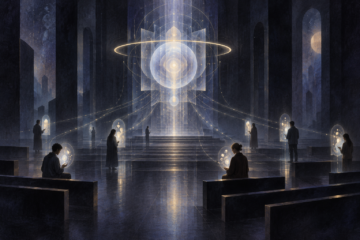 At this point in time, I would have expected to see more “AI religions”, or religious movements focused on AI. Why are there no churches of AI or scriptures of AI worship? I don’t mean use of AI in traditional organized religion, such as the German and Finnish churches experimenting with ChatGPT-written sermons, or bots trained on Jesus or Buddha’s teachings. Rather, I mean movements that treat AI as divine and sacred, a source of revelation, as the vessel for humanity’s salvation.
The demand certainly would seem to be there, with a religion-shaped hole in many people’s lives. Support for organized religion in the West is at historic lows, with less than half of Americans now saying religion is important in daily life (although the decline has somewhat leveled off in recent years). Confidence has also weakened in the belief that secular institutions and systems such as capitalism (not to mention communism) can deliver progress. Pew found in 2022 that only 40% of 18–29 year-olds view capitalism positively.
On the supply side, it would certainly also seem that AI could fit the bill as worthy of worship. AI has elements of humanness in its training data of most recorded human information, but is distinct enough in its thought processes. It is alien, yet familiar. It is rapidly becoming omniscient and wiser and more powerful than humans. It is an oracle in the pocket of the average human, promising transcendence of death, hidden revelation and moral authority.
Historically, there have been many examples of technology-based religious movements. On isolated Pacific islands, what used to be called “cargo cults” worshipped the god-like Western technology of planes and radios during World War II. In the nineteenth century, Auguste Comte’s Religion of Humanity attempted to merge religion’s rituals with a faith in scientific progress. In the 1900s, Ron Hubbard explicitly incorporated elements of “religious technology” in the rites of Scientology. Technology also featured prominently in movements such as Heaven’s Gate, culminating in mass suicide to be taken up by a spacecraft.
So why are we not seeing AI churches and mass ceremonies with crying people professing their faith in the AI saving us? Read more »
 Roldy Aguero Ablao. Talaya’ 3000, 2023.


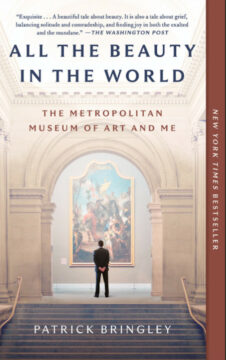 A few years ago I shared a draft of a sonnet sequence with a poet from the Northwest I had followed for a while. I asked him if he’d give the piece a once-over and provide some critique, and his reading was perceptive and useful for me. One comment drew my attention in particular: “I fall flat on ‘beauty,’ ” he wrote. “This is the one place in the poems the image turns outward into metaphor that cannot be touched — ‘beauty’s hidden folds’ is a no-thing” he wrote, pointing out at the last line of the second sonnet.


 Finish the book manuscript

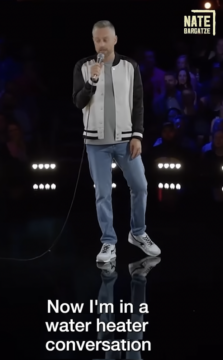 I’ve been a complainer since childhood. From the outside, people might suggest it’s a miserable disposition that’s neither useful nor pleasant, but, from the inside, I was just always noticing ways things could be improved and wondering why (and if) things had to be as they were. Why do we have dinner at six, when I’m hungry at four? So much didn’t make sense, and I was on a crusade to let those in power know about it. My parents handled it with a rule: No complaining without proposing a solution. It’s not a bad strategy, except then they were presented with many uninformed solutions as well. Their patience was astounding. I’ve since come to see the utility and delightful potential of the behaviour.